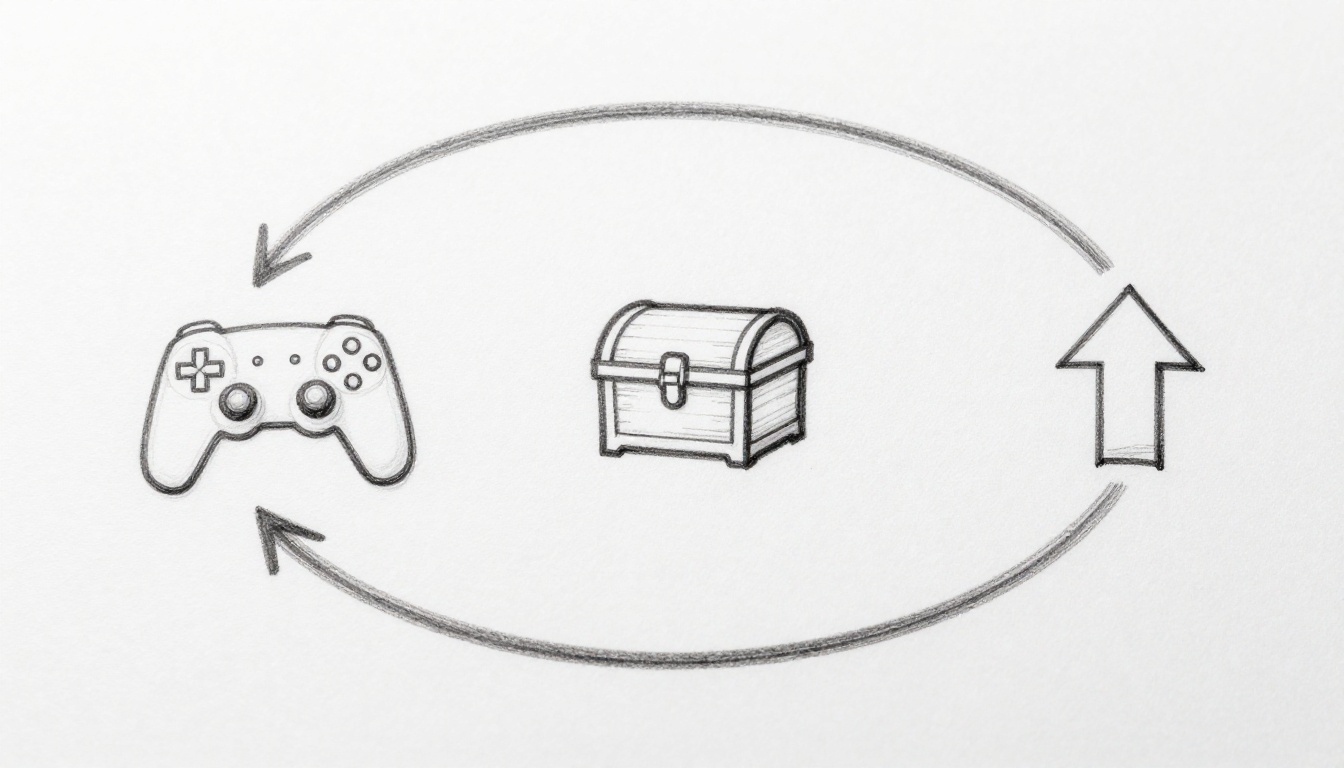
Picture this: Fortnite pulls in millions daily, yet most indie games lose players in minutes. Why? Those hits nail the core loop, the repeating cycle of actions, rewards, and progress at a game’s heart. You design one right, and players stick around for hours.
Weak loops bore folks fast. Strong ones boost retention and turn casual tries into daily habits. In this post, you’ll grasp the basics, follow a step-by-step guide, study real examples, and skip common traps. Follow along, and your game hooks players tight.
What Makes a Core Loop the Heartbeat of Your Game?
A core loop forms the simple cycle players repeat: act, earn reward, see progress. They loop back because each round feels better. This setup drives player engagement loops in game design.
Players crave it. Quick wins spark joy, much like scrolling feeds for likes. You tap that pull, and sessions stretch long. Poor loops? Players quit when fun fades.
Designers win big here. Solid loops mean more plays, better reviews, higher revenue. Master designing core loops for engagement, and your title stands out.
The Three Must-Have Parts of Any Solid Core Loop
Every strong loop needs three linked pieces. First, the core action: a fast, fun move like jumping platforms or matching tiles. In Super Mario, you dash and stomp; it hooks alone.
Next, reward: instant payoff such as points, blasts, or loot drops. Think Pac-Man’s chomps and scores; they fuel the next act.
Then, progression: upgrades or levels that amp future loops. Angry Birds grants stronger birds after wins.
These connect tight. Action sparks fun. Reward motivates repeats. Progress retains players. Balance them, or the cycle breaks.
Why Core Loops Turn Casual Players into Addicts
Loops hit psychology sweet spots. They match challenge to skill for flow states, where time flies. Variable rewards, like random loot, add thrill; players chase the next big drop.
Games with tight loops see five times longer sessions. Remember Tetris marathons? That endless clear-and-drop cycle did it.
Social shares boost it too. You share wins, friends join. Designers gain downloads and cash. Casual players turn hooked because loops feel rewarding, not forced.
Build Your Core Loop Step by Step for Maximum Stickiness
Ready to design a core loop? Follow these four steps. Indies and teams use them daily. Start simple, iterate often. Build on the action-reward-progress basics.
- Pick your core action. Brainstorm three ideas. Choose one joyful alone, under 30 seconds per loop. Swipe in puzzle games works; it’s easy to learn, hard to master. Pitfall: multiple actions split focus. Test: play it solo. Does it grin-induce?
After that base, layer rewards. 2. Add varied rewards. Mix immediate hits like sounds and visuals with scores that build. Toss in rares for surprise. Scale by skill; pros get epic drops. A/B test feels. Avoid paywalls early. This keeps loops fresh, leads to progress. 3. Build progression paths. Add levels, upgrades, or worlds. Use skill gates so effort unlocks power. Show bars and badges clearly. Balance speed: too slow grinds, too fast skips thrill. Leaderboards add social push. 4. Test and refine. Playtest hard. Track loops per minute, day-one retention. Speed slow spots, boost weak rewards. Free tools like Unity Analytics help. Pro tip: loops change as your game grows.
Core Loop Wins from Games That Dominated Charts
Real games prove it. Study these core loop examples in games. Each nails action, reward, progress. Adapt them to your project.
Candy Crush: Match, Blast, and Climb Endlessly
Swap candies to match. Cascades explode for combos and points. Levels unlock boosters.
Variety in boards keeps it fresh. Billions play because dailies refresh the cycle. Casual heaven.
Fortnite: Build, Fight, and Dance to Victory
Build ramps, shoot foes. Kills drop loot; wins grant loot. Seasons bring skins and events.
Social dances amplify shares. Live events reset the loop. Retention soars from constant refreshes.
Stardew Valley: Farm, Explore, and Bond Deeply
Plant seeds, harvest crops. Gold buys tools; chats build relationships.
Upgrades expand farms. Cozy pace suits relaxers. Loops fit all genres, prove versatility.
Dodge These Core Loop Killers Before Launch
Even great ideas flop on loop flaws. Spot these four, fix fast. Save redesign pain.
Grind Without Glory: When Progress Feels Pointless
Long waits with no wins kill motivation. Players bail.
Fix it: add micro-progress like daily ticks. Preview big rewards. Bad example: endless farms no upgrades. Good: Stardew’s quick sells.
One-Note Loops: Boredom Sets In Fast
Same action repeats bore quick. No variety ends sessions.
Solutions: add modifiers, modes, events. Link to reward variety from step two. Rotate elements often.
Overload: Too Much Choice Paralyzes Players
Complex starts confuse. Folks quit overwhelmed.
Ease in: tutorial loops teach one piece. Add gradually. Guide them step by step.
A strong core loop powers your game’s success. Grasp the parts, follow the steps, learn from hits like Candy Crush, and skip grind traps. Players stay engaged because you built a cycle they crave.
Prototype yours this week. Test that action, tweak rewards. Share your loop in comments; let’s swap ideas. Your title could hook the next million.