Ever opened a loot box in your favorite game and crossed your fingers? That thrilling moment when RNG spits out epic gear or total junk happens because random number generation powers it all. But here’s the twist: most “random” in games, apps, and even lotteries isn’t truly random at all.
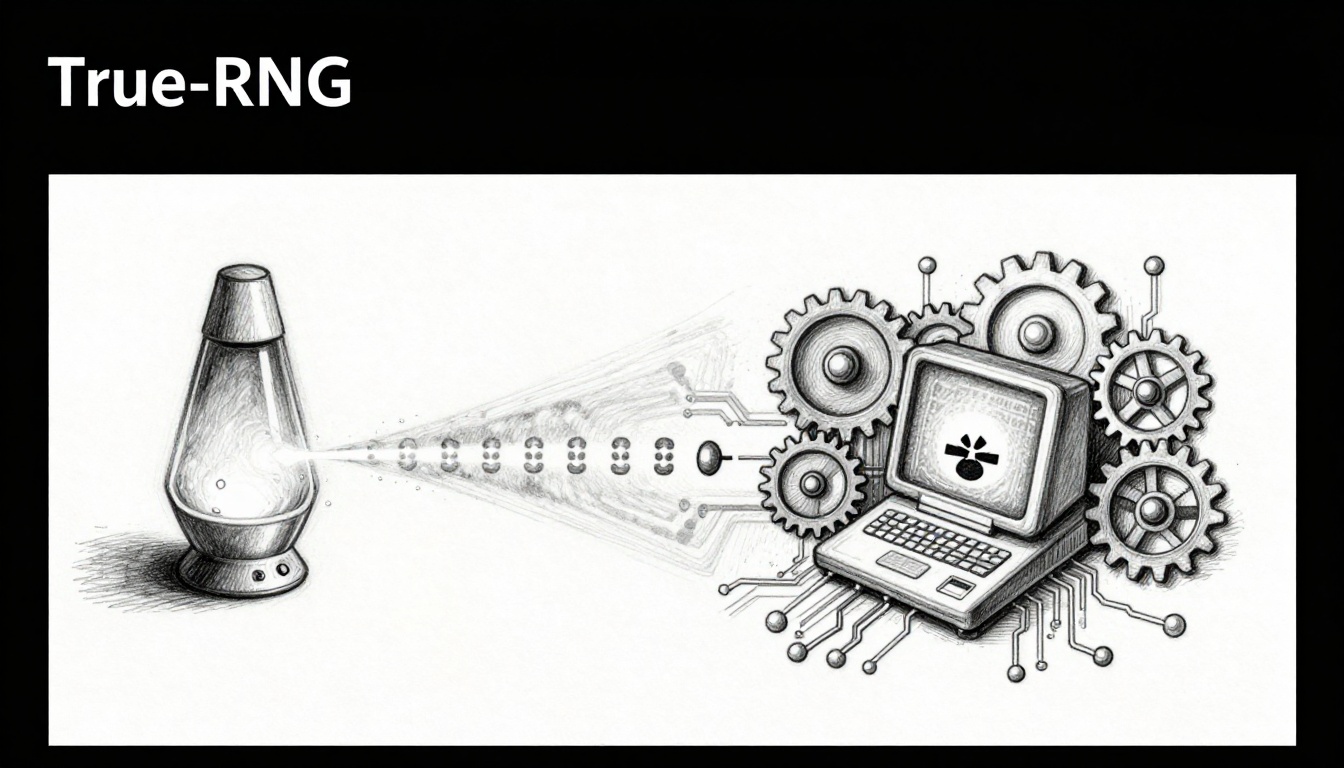
True RNG pulls numbers from real-world chaos. Think quantum fluctuations or atmospheric noise; no one can predict them because they stem from physics beyond control. Computers can’t generate this on their own, so they rely on hardware like radioactive decay detectors or lava lamps for genuine unpredictability.
Pseudo-randomness, on the other hand, comes from math formulas. You start with a seed number, like the current time, and an algorithm churns out sequences that look random. They pass basic tests, yet they’re fully deterministic; rerun the same seed, and you get identical results every time.
So why should you care? In gaming, weak pseudo-RNG leads to predictable loot, killing the fun and trust. Online banking and crypto demand true RNG for secure keys; a hackable pseudo version spells disaster. Even AI training needs solid randomness to avoid biased patterns that skew results.
We’ve all felt the sting of a bad roll in Monopoly or a lottery near-miss. Yet behind these moments hides a battle between chaos and code. Understanding it helps you spot fair systems from fakes.
In this post, we’ll break down true RNG sources, like how casinos use them. Next, pseudo-random tricks that fool most people. Then, key differences with real examples. Finally, everyday uses in games, security, and beyond.
Ready to peek behind the randomness curtain?
Unveiling True Random Number Generation: Nature’s Unpredictable Power
True random number generation grabs unpredictability straight from the physical world. Hardware devices capture chaos like quantum events or thermal noise in resistors. These sources pack high entropy, the measure of true uncertainty. Picture a coin flip in a hurricane; no pattern survives that mess. Computers alone spit out predictable sequences because they follow strict logic. They need extra gear to harvest real randomness.
Take Intel’s RdRand instruction. It taps hardware noise for secure keys in crypto or gaming. Cloudflare stacks lava lamps for the same reason. Casinos and lotteries use similar tech to ensure fair draws. Benefits shine in security; hackers can’t guess these numbers. In games, they deliver honest loot drops that keep players hooked. You get ultimate fairness without repeats or biases. However, setups cost money and space. Still, the payoff beats fake randomness every time.
Most importantly, true RNG roots in physics computers ignore. Quantum vacuum fluctuations jitter at tiny scales. Photons hit detectors in unpredictable bursts. Resistors buzz with heat-driven electrons. All this feeds endless streams no algorithm mimics. Everyday tech like your phone’s secure ID relies on it. So next time you log in safely, thank nature’s wild side.
Surprising Real-World Sources of True Randomness
You encounter true randomness more than you think. Everyday chaos powers it. Companies pull from sources like atmospheric radio noise. Others grab quantum quirks. Let’s break down a few accessible ones.
Atmospheric radio noise works first. Radios pick up static from lightning and cosmic rays. That buzz varies wildly. Cloudflare films lava lamps for pixels that shift in chaotic drips. Cameras snap variations every second. Pros include a steady supply; no fuel needed. Cons mean bulky hardware and power draw. Who knew lava lamps could secure the internet?
Radioactive decay offers another path. Atoms spit particles at random times. Detectors time the gaps between decays. It’s purely probabilistic, per quantum rules. Labs use Geiger counters for this. Endless because isotopes keep decaying. Yet you need safe handling and shielding.
Mouse movements provide a simple option. Users wiggle cursors in unique paths. Software averages speed and position over time. Phones track taps the same way. It’s free but slow; bots fake it easily. Average it long enough for decent results.
Quantum vacuum fluctuations demand labs. Empty space bubbles with virtual particles. Lasers spot their tiny tugs. Photons arrive in random counts too. These score top entropy but cost a fortune in gear.
Fun fact: Some systems clock hard drive spin-down times. Heads settle unevenly from vibrations. Cheap and built-in for old PCs.
These tie to your tech daily. Banks encrypt with decay timers. Games seed loot from your swipes. Nature hands us free chaos; we just bottle it.
How Experts Test for Genuine Randomness
Testing spots fakes fast. Experts run long sequences through suites like the NIST battery or Diehard tests. They hunt patterns, biases, or repeats that scream “not random.” True RNG passes because physics defies prediction.
Start with entropy checks. Good sources hit near-max bits of uncertainty per number. A 1-megabyte string should pack 8 million bits if perfect. Low scores flag issues.
Visual runs tests follow. They count streaks of 0s or 1s in binary. Too many long runs or clumps mean bias. Random bits flip evenly, like fair coin tosses.
Poker tests scan short chunks. They mimic card hands for repeats. All 3s or flushes? Suspicious. True RNG spreads combos like a real deck.
The Diehard suite pushes harder. It runs 100+ trials on poker, birthday spacings, and more. Failures show clumps or gaps.
NIST adds modern stats. Monobit balances 0s and 1s. Frequency checks block uniformity. Tools like random.org let you demo live. Paste a string; see scores instantly.
Why bother? Gamers crack weak lotteries by spotting cycles. Crypto keys leak if predictable. Banks block fraud with tested RNG. One bad run costs millions.
In short, tests keep systems honest. Run your own on random.org. You’ll see true chaos shine.
Pseudo-Random Numbers: Clever Computer Illusions of Chaos
Computers fake randomness with smart math tricks. These pseudo-random number generators, or PRNGs, crank out long strings of numbers that mimic true chaos. They start from a seed value, like the exact second you boot up your game. Then algorithms twist that seed into sequences that fool basic checks. Yet everything stays deterministic. Feed the same seed into the same formula, and you get identical results every time. No surprises there.
Engineers built the first PRNGs back in the 1940s for the ENIAC, one of the earliest computers. They needed quick numbers for simulations, like ballistics during World War II. Hardware randomness stayed rare and clunky, so software filled the gap. Today, PRNGs power everything from Excel spreadsheets to video game loot drops. They shine because they run millions of numbers per second without extra gear. You save cash and space. In addition, they work offline, perfect for mobile apps or simulations.
However, cycles lurk in the shadows. Every PRNG loops back eventually, repeating the sequence. Good ones stretch for trillions of steps before that happens. Poor ones crash early, exposing patterns. Think of a shuffled deck that looks messy but follows a hidden order. Gamers spot this sometimes. If someone grabs your game’s seed, like from system time, they predict every loot box. That kills the thrill. You hit refresh and snag rare items on demand. Developers patch it by mixing seeds with user input, but cracks still appear.
Benefits outweigh risks in most spots. Graphics engines churn particles for explosions. Weather models predict storms with billions of “random” starts. AI trains on varied data batches. No one notices the fakeness because periods stay huge. Still, security demands caution. Crypto wallets avoid basic PRNGs for keys. Hackers reverse-engineer weak ones, guessing passwords or nonces. Banks layer true RNG on top for safety.
You use PRNGs daily without thinking. Your phone’s fake dice roll in apps comes from one. Excel’s RAND() button refreshes sheets for what-if tests. Java apps seed from nanoseconds for unique IDs. They feel random because our brains miss the math. Yet peek under the hood, and order rules. Next, we’ll unpack the top algorithms driving this illusion.
Core Algorithms Powering Most PRNGs Today
Popular PRNGs rely on simple yet powerful math. Take the Linear Congruential Generator, or LCG. It uses a basic formula: multiply the last number by a constant, add another constant, then take the remainder after dividing by a big modulus. That spits out the next “random” value. John von Neumann helped pioneer it in the 1940s. It’s dead simple, so it fits everywhere.
Then comes the Mersenne Twister, a favorite in Python’s random module and many games. It boasts a massive period of 2 to the power of 19937 minus 1. That’s over 600 digits long before repeating. Developers love it for stats work and simulations. Fun twist: the name nods to Mersenne primes, discovered by a 17th-century monk who studied perfect numbers. Priests and primes team up for code.
Xorshift keeps things speedy for real-time needs like games. It shifts bits left and right, then XORs them for quick twists. No multiplies slow it down. Games use it for enemy spawns or particle effects because it flies at top speed.
Seeds kick it off. Grab the current time in milliseconds. That becomes x0. Run the algorithm, and numbers tumble out: 42, 17, 903, whatever. Excel’s RAND() leans on LCG variants for quick recalcs. Java’s Random class mixes LCG with extras for better spread.
Pros dominate. These run millions per second on basic hardware. No noise detectors needed. They seed easily from clocks or mouse moves. In short, they power daily tech without fuss.
The Hidden Flaw: Why PRNG Isn’t Truly Random
PRNGs crumble under scrutiny because predictability hides inside. Know the seed and formula, and you reverse-engineer the whole stream. Weak ones let hackers grab a few outputs, then forecast the rest. Remember the PredictIt betting site hack? Attackers sampled trades, cracked the PRNG seed, and cleaned up big. Short cycles plague bad generators too. They loop after thousands, not trillions, of steps. Patterns emerge fast.
Correlations sneak in as well. Numbers cluster or avoid gaps, failing deep tests like NIST suites. True RNG shows perfect independence; each bit flips without bias. Picture dice rolls where 7s never clump. PRNGs fake it but slip up on stats.
Casinos learned this hard way. Slot machine cracks spotted patterns in old PRNGs. Players timed spins to hit jackpots. Graphics tolerate flaws; who cares if stars twinkle predictably? Security screams no. Encryption keys from PRNGs leak fast.
So when does it work? Fine for visuals or non-critical sims. Risky for passwords or lotteries. Can hackers guess your “random” password generator? Absolutely, if it uses basic PRNG without true entropy. Mix in hardware sources to stay safe. In contrast, true RNG laughs at guesses because physics rules.
RNG vs Pseudo-RNG: Spotting Differences That Impact Your World
True RNG and pseudo-RNG look similar on the surface. However, their differences shape everything from your game loot to bank security. True RNG draws from physical chaos, so no one predicts it. Pseudo-RNG follows math rules, so it repeats with the right seed. These gaps matter in real life. For example, picture true RNG as a wild river carving new paths each time. Pseudo-RNG acts like a looped rollercoaster, thrilling but always on rails.
Key contrasts appear in daily tech choices. Here’s a quick side-by-side view:
| Aspect | True RNG | Pseudo-RNG (PRNG) |
|---|---|---|
| Speed | Megabits per second; needs hardware | Billions per second on any CPU |
| Cost | Expensive chips or devices | Free software, no extra gear |
| Entropy | Maximum uncertainty from physics | Limited by algorithm math |
| Reproducibility | Impossible; unique every run | Perfect; same seed yields same output |
| Scalability | Hard to ramp up without more hardware | Scales easily across servers |
| Security | Resists hacks, even quantum attacks | Fails if seed guessed; needs careful seeding |
This table shows why PRNG rules 99% of uses. Performance wins big. Yet true RNG steps in for high-stakes spots. You learn here when to push for the real deal.
Predictability and the Security Showdown
PRNGs falter on predictability first. Attackers guess seeds from system clocks or timestamps. That opens doors wide. Poker sites suffered hacks because players predicted card shuffles. The Debian OpenSSL bug in 2008 crushed crypto keys too. One code tweak slashed entropy, so bots cracked logins fast.
Consider the 2013 Android flaw. Java’s PRNG used weak seeds. Hackers exposed Bitcoin wallets with ease. They grabbed a few numbers, then forecasted the rest. Result? Millions lost. Simple rule holds: if repeatable, it’s not secure.
True RNG fights back hard. Physical sources like quantum noise defy guesses. Even quantum computers struggle against them. No seed exists to crack. Banks mix hybrids for this reason. They reseed PRNGs with true bits from hardware. Your login stays safe because apps blend both worlds.
In short, predictability kills PRNG in pure security roles. Yet hybrids bridge the gap. Next time you bank online, true entropy guards your cash.
Speed and Cost: Why PRNG Dominates Daily Tech
Speed tips the scale next. PRNGs pump out billions of numbers per second on basic CPUs. True RNG tops at megabits per second. It demands dedicated hardware like quantum chips. Games churn particle effects with PRNG because lag kills fun. No one waits for slow entropy.
Cost follows close. PRNG runs free in software. True RNG needs pricey gear, often dollars per chip. Servers scale PRNG across clouds without sweat. Add true hardware everywhere? Budgets explode.
Hybrids smarten it up. They reseed PRNGs with true random bits now and then. This boosts security without full slowdown. Lotteries pick true RNG for certifiable fairness. Regulators demand proof no patterns exist.
Think of PRNG as a bicycle for city streets; quick and cheap. True RNG feels like a spaceship for deep space; powerful but overkill most days. PRNG fits games, simulations, and apps perfectly. True wins only where proof matters most.
Where RNG and PRNG Shine in Real Life
You see RNG and PRNG clash in everyday apps. PRNG handles speed-heavy tasks because it flies fast and scales easy. True RNG steps up for spots that demand proof no one rigs the game. Both fit perfect roles, so developers pick smart. For example, games lean PRNG for loot drops, yet blockchain casinos swear by true RNG for trust. Let’s check key spots where each rules.
Gaming Worlds: Fast PRNG Meets Fair True RNG
Games crave quick numbers for enemy spawns and particle blasts. PRNG delivers because it spits billions per second. No lag ruins your raid. Developers seed it from system time or your mouse wiggles for fresh starts each play.
However, fairness matters too. Blockchain casinos use true RNG for provable draws. Players verify every roll on the chain; no house cheats. Remember loot boxes? Weak PRNG let cheaters predict epics by cracking seeds. Patches mix in true bits now. You get speed from PRNG plus trust from hardware chaos. In short, most games stick PRNG, but high-stakes ones blend both.
Picture Fortnite storms or Diablo drops. PRNG keeps frames smooth. True RNG shines in esports tournaments where audits check honesty.
Crypto and Security: True RNG Guards Your Wallet
Crypto demands ironclad keys. Basic PRNG fails here; hackers guess seeds and drain accounts. That’s why wallets use CSPRNG, a tough PRNG reseeded with true entropy. It mimics chaos but runs fast.
Early mistakes hurt bad. Netscape’s SSL in the 90s used a flawed PRNG. Attackers predicted session keys and sniffed traffic. Millions risked. Today, browsers pull true RNG from Intel chips or phone sensors.
Banks do the same for PINs and logins. You tap your card; quantum noise encrypts it. PRNG handles bulk traffic, true RNG salts the keys. Result? Hackers hit walls. If you trade Bitcoin, thank hardware chaos for safe nonces.
Simulations and AI: PRNG’s Reproducible Magic
Science sims love PRNG most. Weather models rerun storms exact because same seed yields same paths. Researchers tweak one variable, compare results clean. No physical hardware slows supercomputers.
AI training follows suit. PRNG splits data into random batches each epoch. Teams share seeds to match runs perfect. Reproducibility builds trust; no one cries “my model lucked out.” For example, TensorFlow seeds from time for fair tests.
True RNG fits rare cases, like one-off physics tests. But cost kills it for daily work. PRNG rules labs because results stick.
Lotteries and High-Stakes Draws: True RNG Proves Fairness
Lotteries pick true RNG every time. Regulators demand hardware logs no one fakes. Balls in drums work old-school, but digital pulls radio noise or decays now. Players check public seeds post-draw.
Casinos slot true RNG chips in machines. Spins hit physical buzz; auditors test streams. PRNG tempted cheats before; patterns timed jackpots. Now hybrids lock it down.
You buy tickets safe because physics rules.
Picking the Right One: Your Quick Guide
Need speed and repeats? Grab PRNG. Games and sims thrive on it. Audit-proof fairness? True RNG only. Lotteries and crypto insist.
Future shifts fast. Quantum RNG chips hit phones by 2030. Cheap true chaos everywhere. Meanwhile, hybrids bridge gaps best. Check your app’s docs; know what powers the random. You play smarter now.
Conclusion
True RNG taps physics for unbeatable trust in security and lotteries. PRNG delivers speed for games and simulations, so it rules most apps you use. Most “random” moments come from math tricks, yet you spot when real chaos matters most.
Hybrids blend both worlds best. They reseed fast PRNG with physical bits for safe, quick results. Games keep loot exciting, banks guard cash tight. Pick tools that fit your needs, and systems stay fair.
Quantum RNG chips head to phones soon. Chaos gets cheap and everywhere. Test streams on random.org against your code today.
Share your wildest game RNG story in comments. Did a bad roll crush you, or did luck strike big? Spread this post so friends play smarter too.
Now you’re randomness savvy.