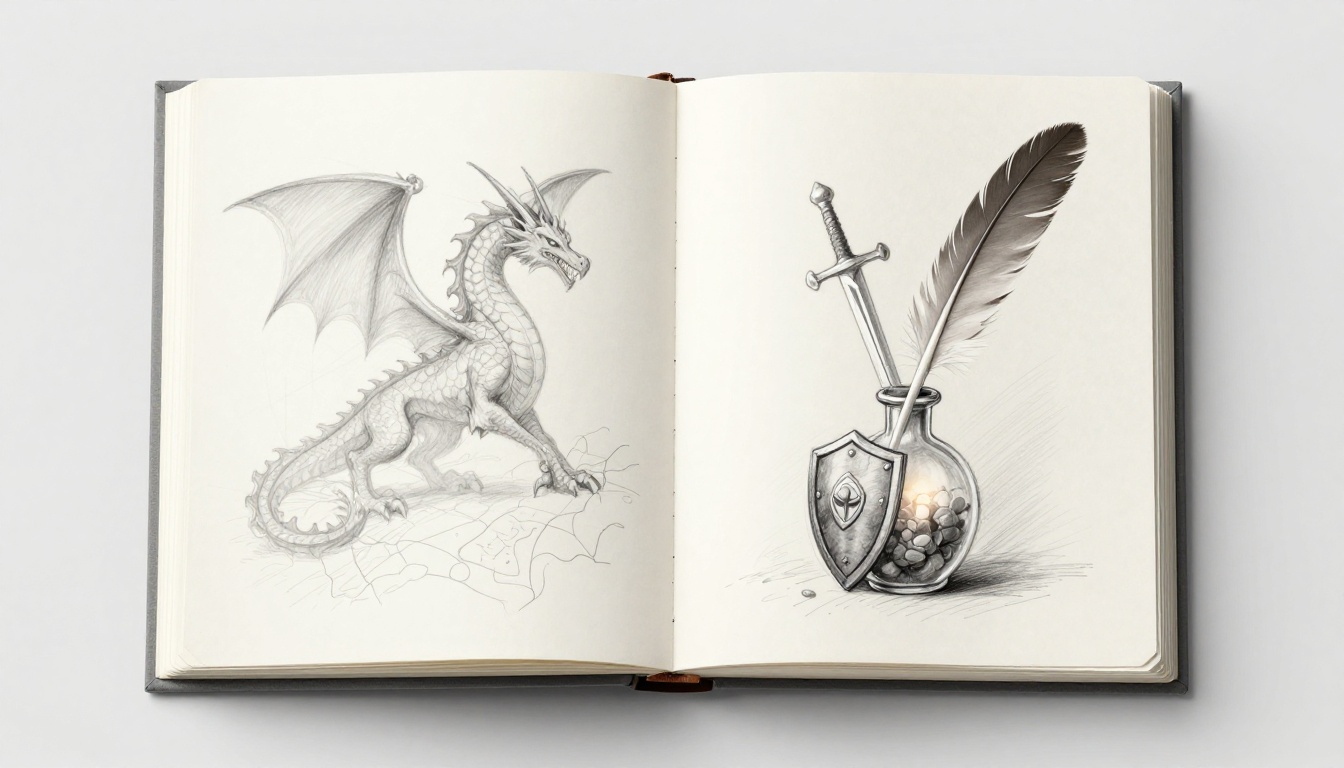
You boot up Skyrim. A dragon roars overhead. Your quest log pops up with “Kill the dragon terrorizing Riverwood.” It feels epic because the entry pulls you in. It says you heard the villagers’ cries and spotted scales glinting in the sun.
Quest logs track missions in your journal. They add story flavor beyond dry tasks. Item descriptions give gear and loot personality past raw stats. Good ones pull players deeper into your world. They boost playtime and make games stick in memory.
This post shares steps to nail them. You’ll learn quest log basics first. Then item tricks that spark obsession. Plus pitfalls to skip and polish tips. Follow these, and your writing will shine.
Turn Boring Tasks into Thrilling Quest Logs
Quest logs need a punchy title, summary, objectives, and lore bits. Use “you” to make it personal. Players see themselves in lines like “You spot the dragon’s lair ahead.” Mix short and long sentences for rhythm. Match tone to the quest. Side quests get mystery. Main story quests build urgency.
Take a bland log: “Go to cave. Kill bandits. Get gold.” Rewrite it. “Bandits plague the northern cave. You’ve heard their laughter on the wind. End their reign and claim their hoard.” Players lean in because it paints a picture. They want to dive in.
Focus on flow. Keep entries under 100 words. Test on mobile screens. Players skim fast, so every word counts.
Start with a Hook That Grabs Attention Instantly
Open strong. Use action verbs or questions. “Will you save the village from the shadow beast?” works for fantasy. In sci-fi, try “Alarms blare as aliens breach the hull.”
Hooks matter because players glance at logs mid-action. A cliffhanger like “The elder’s dying words burn in your ears: find the heir” stops them cold. Skip info dumps. No long histories here.
Examples fit genres. Fantasy: “A cursed blade calls your name from the depths.” Sci-fi: “Decode the signal before the fleet arrives.” Horror: “Footsteps echo behind you in the dark labs.” Mystery: “Who poisoned the king’s chalice?” Each pulls players back to the task.
Craft yours in seconds. Ask what grabs your hero’s gut. Players follow.
Craft Objectives That Guide Without Spoiling
List goals clear but teasing. “Find the lost amulet (hidden in ancient ruins).” Active words help. “Sneak past guards” beats “Avoid guards.”
Use bullets for readability. Number if order matters. Track progress with checks. Branch for choices. One path says “Convinced the guard.” Another notes “Slew the guard.”
This builds agency. Players see their impact. Keep lists to five max. Short phrases guide without frustration.
Make Updates Feel Alive and Responsive
Change logs after events. “The beast wounded you, but you pressed on.” It rewards progress. Add paths for replays. One branch: “Allied with elves.” Another: “Betrayed the elves.”
Don’t overdo it. Clutter annoys. Update only at big beats. This keeps logs fresh across runs. Players notice and return.
Layer in Emotion to Raise the Stakes
Tie quests to feelings. “Rescue your old mentor before it’s too late.” Tension rises. Add humor for light quests. “Fetch the wizard’s missing socks. He promises pants of power.”
Games like The Witcher nail this. Geralt’s logs mix grit and wit. Keep it short for UI. One emotional line per entry boosts pull. Players care more. They finish stronger.
Write Item Descriptions That Players Obsess Over
Item text starts with name and stats. Then flavor hits. Tell origin stories or curses. Rare gear gets epic tales. Common stuff charms simple.
Match rarity. Legendaries shine. “Wielded by gods, it thirsts for blood.” Use vivid words. Players share screenshots because it feels alive.
Template: Stats first. Flavor next. End with hook. “+10 Strength. Forged in dragonfire. Feel its heat pulse.”
This structure fits any game. Multiplayer thrives on shareable flair.
Blend Hard Stats with Enchanting Backstory
Pair numbers with tales. “+10 Strength. Forged in dragonfire by a fallen king, it whispers promises of glory.” Story makes stats memorable. Players equip for lore too.
Stay true to world rules. A pirate sword mentions salty seas and buried gold. Consistency builds trust. Players invest deeper.
Paint Pictures with Sensory Details
Evoke senses. “The blade hums with electric fury. Its edge gleams like storm clouds.” Sight and sound pop.
Touch: “Grip rough leather worn by a hundred hands.” Smell: “Reeks of sulfur and victory.” Taste: rare, but “Bitter venom coats the tip.” Sound: “Chains rattle as you swing.”
Don’t overload. One or two per description. Players visualize. They crave it.
Emphasize Uniqueness and Rarity Fantastically
Rares demand awe. “One of three ever forged. Gods themselves hunt it.” Commons get warmth. “Farmer’s trusty hoe. Dented but true.”
This fuels trades and collections. Players chase stories. Rarity drives hunts.
Dodge Common Mistakes and Refine Your Craft
Walls of text kill immersion. Typos break spells. Lore breaks confuse. Read aloud. Cut fluff. Check on phones.
Iterate fast. Share drafts. Tweak based on gut. Experiment keeps it fun.
Skip Bland, Generic Phrasing Every Time
Spot “a sword.” Fix to “jagged relic from forgotten wars.” Ditch overused “ancient” alone. Twist it: “ancient but humming with new magic.”
Common traps: “powerful weapon.” Say “crushes skulls like eggshells.” Specific sells.
Test Your Writing on Real Players
Run playtests. Ask “Does this excite you? Confuse?” Note reactions. A/B test logs. One hook versus another.
Use Google Forms free. Share links. Feedback sharpens quick.
Use Free Tools to Speed Up Polish
Hemingway App flags complex spots. Thesaurus swaps dull words. itch.io forums share drafts. Peers spot issues.
These speed work. Polish makes pros.
Great quest logs hook with action and heart. Item descriptions blend stats and stories. Edits ensure shine.
Pick one tip now. Write a sample log or item. Share in comments. Your words might spark the next hit game.
What quest gripped you most? Drop it below. Sign up for more dev tips. Keep creating.