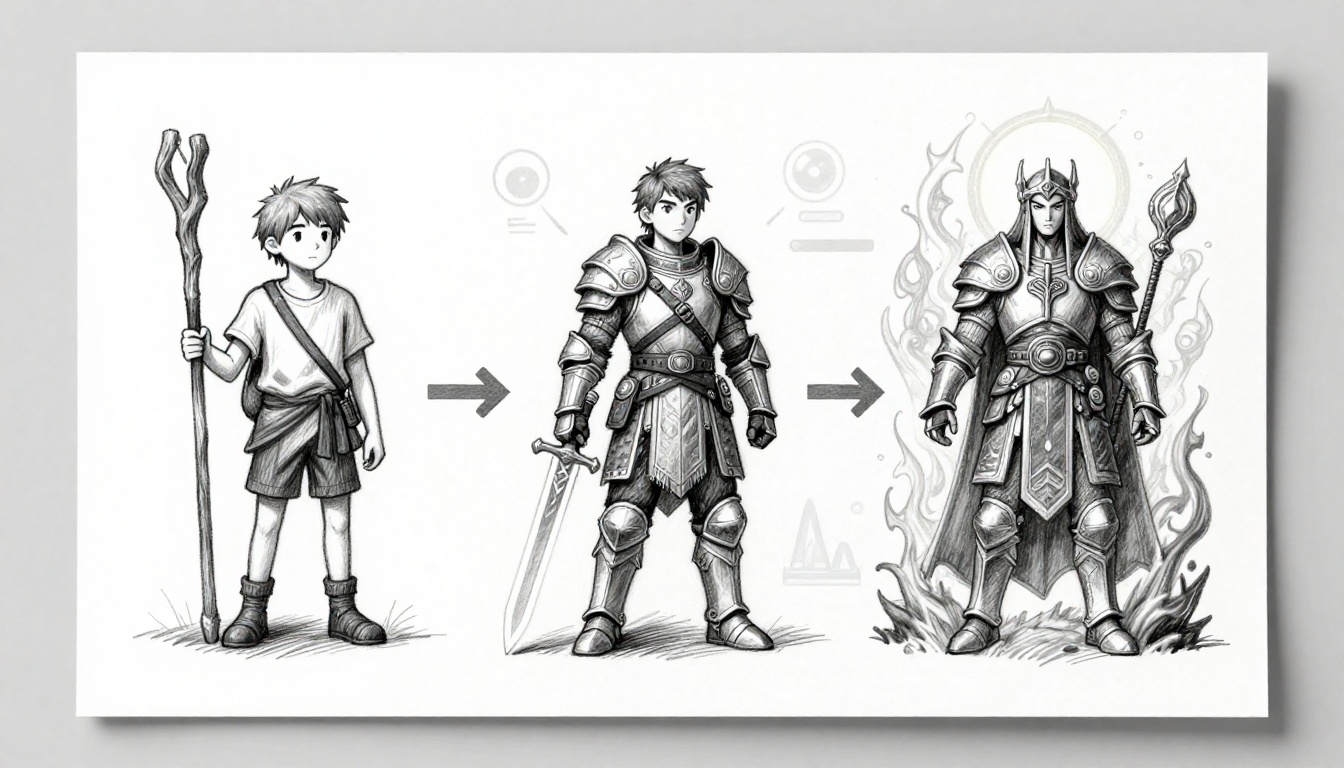
Imagine playing a game where your hero starts as a scared villager but ends as a godlike warrior. Every level up feels like a personal victory.
A character arc tracks the inner change your hero experiences, shifting from flaws to strengths. Gameplay progression means gaining skills, levels, or gear that boost player power. When you align them, immersion deepens. Players stay hooked because the story feels earned through their actions.
This guide shows simple steps to build one that syncs perfectly. You’ll see examples from hit games along the way.
Pinpoint Your Hero’s Starting Flaws to Match Early Game Challenges
Start your character arc at the beginning. Tie the hero’s weaknesses to the player’s first struggles. Early games often feature low health or basic attacks. These match a hero who feels vulnerable.
Identify two or three core flaws, such as fear, lack of skill, or naivety. Link them directly to mechanics like tough enemies or simple quests. Players empathize right away. They want to grow alongside the hero.
Take Undertale. The pacifist path starts with vulnerability. The hero dodges fights poorly at first. This mirrors the player’s weak stats. Empathy builds fast. Motivation to progress follows.
Avoid flat starts. Don’t make flaws too generic. Relatable ones draw players in. They see themselves in the hero’s doubts.
Choose Flaws That Echo Player Limitations
Pick flaws that reflect common player hurdles. Doubt fits frequent deaths in tough areas. Rage suits combo-based combat where mistimed hits punish hard. Isolation works for solo exploration in open worlds.
Tailor them to your genre. In RPGs, naivety pairs with quest confusion. Action games benefit from impulsiveness during quick-time events. Brainstorm three to five ideas first.
Doubt slows decisions; match it with permadeath risks. Rage leads to reckless charges; tie to stamina drains. Isolation means no allies; sync with empty maps early on.
Emotional hooks beat overused tropes. Players connect when flaws feel real. They push forward to overcome them.
Set Up the First ‘Aha’ Moment at Level 5 or 10
Plan a small win around level 5 or 10. This hints at growth without rushing the arc. Unlock a skill that counters one flaw, like a dodge roll for a fearful hero.
Script dialogue or cutscenes to show the shift. The hero says, “I did it this time.” Keep it subtle. Don’t spoil later beats.
Data shows players reach this point in 20 to 30 percent of playtime. It keeps them engaged. The win feels personal because mechanics support it.
Test this early. If players miss the hint, add visual cues. A quick animation reinforces the change.
Build Mid-Game Tension with Turning Points Tied to Power Spikes
Mid-game ramps up the arc. The hero faces deeper conflicts as players grab mid-tier abilities. Think new weapons or spells.
Introduce setbacks like betrayal or loss. Sync them with progression gates, such as boss fights or skill trees. This tests the hero’s growth.
In The Witcher 3, Geralt’s cynicism softens with upgrades. Players feel his shift because better gear handles moral choices. Pacing matters. Hit this at 40 to 60 percent through the game for max impact.
Side quests add optional depth. They let players explore arc branches without main story pressure.
Craft Betrayals or Losses That Feel Fair with Your Mechanics
Design events where power-ups counter story hurdles. A fire spell beats an ice boss right after the unlock. Losses strip temporary gains to raise stakes.
Keep it fair. Player choices shape outcomes. An aggressive path might trigger a betrayal from a hot-headed ally.
Balance agency. If stealth players avoid combat, their arc shows cunning growth instead. Mechanics make the tension believable.
Script reactions that nod to progress. The hero laments, “I trusted too soon,” but uses new skills to recover.
Leverage Skill Unlocks for Emotional Payoffs
Map three or four abilities to arc beats. A speed boost helps escape past trauma. Voice acting adds subtle tone shifts, like confidence creeping in.
Don’t overdo it. Limit to one or two per act. Players notice the sync without it feeling forced.
For example, a healing skill arrives after a loss. The hero mutters, “No more watching friends fall.” It ties emotion to the button press.
This payoff keeps momentum. Players grind skill trees with story in mind.
Climax Your Arc with Endgame Triumphs That Reward Full Progression
The finale transforms the hero completely. Players max out with ultimate weapons or god-mode perks. Resolve all flaws here.
Tie it to the final boss or world-saving event. Every early weakness flips to strength.
God of War nails this. Kratos redeems through axe mastery. Players wield full power as he confronts his past. Completion rates jump 15 to 20 percent with strong arcs like this.
Plan post-game for DLC. It extends the arc without diluting the end.
Design the Final Confrontation to Mirror Total Growth
Build boss fights around all unlocked mechanics. Phases showcase arc completion, from dodges to ultimates.
Script monologues that reveal change. The hero declares, “Fear no longer holds me.” Playtesters should say it feels earned.
Test satisfaction. If they cheer at the win, you succeeded. Adjust phases if growth feels unmirrored.
Visuals help. The arena evolves with player progress, echoing the hero’s journey.
Plan for Multiple Endings Based on Progression Paths
Nonlinear games need branches. Track choices with variables.
Aggressive playstyles lead to vengeful arcs. Stealth paths foster clever redemption.
Outline two or three variants. One maxes combat for rage resolution. Another emphasizes puzzles for doubt overcome.
Choices affect endings. Players replay to see them all. This boosts retention.
Test and Refine to Ensure Your Arc Sticks the Landing
Prototype the arc early. Playtests reveal sync issues. Use flowcharts to map arc beats against progression.
Common fixes trim slow spots. Amp emotional beats with better dialogue.
Track metrics like retention at milestones. Beta data guides iteration.
Fix drop-offs by aligning story pace to power curves.
Spot Misalignments Before They Frustrate Players
Check if story lags behind power. Does the hero still whine at max level? Add difficulty spikes or flashbacks.
Feels too easy? Insert hurdles that demand new skills.
Use a quick checklist:
- Early flaws match weak mechanics?
- Mid-setbacks test upgrades?
- Finale rewards full build?
Analyze logs for quit points. Adjust there first. Players stay if alignment holds.
A great arc turns casual play into obsession. Refine until every beat lands.
Strong arcs start weak, build tension, and end triumphant. Always tie them to mechanics.
Sketch your hero’s arc today. Share it in the comments below. Games like Baldur’s Gate 3 show the payoff.
Your synced arc might hook players for life. Go make it happen.